A search that uncovers drugs and a digital scale can lead to allegations beyond simple possession. Fulgham Hampton Criminal Defense Attorneys defends clients accused of possession with intent to deliver and drug manufacturing in Tarrant County, where prosecutors may use drug quantities and packaging to argue that sales were planned. Our firm's drug crime lawyers challenge those assumptions from the start.
We dig into how the search happened, who else had access to the house, and whether the lab weight holds up. Call 817-877-3030 to have our team review the evidence against you.
Drug Case Defense Built on Tarrant County Courtroom Work
A search often provides the evidence behind a Tarrant County drug charge, making it a starting point for the defense. Our attorneys pull the warrant affidavit apart line by line, checking whether an informant tip was corroborated and whether officers stayed inside the four corners of what a judge signed. Specifically, we look for the gap between what the affidavit promised and what the officers actually found.

Brandon Fulgham and Jeff Hampton both served as prosecutors in the Tarrant County District Attorney's Office. That experience helps them assess plea offers, identify weaknesses in laboratory evidence, and challenge whether the facts support intent to deliver or only possession. Each case receives an individual assessment of whether to fight the allegations or pursue a negotiated resolution.
Clients reach Fulgham Hampton Criminal Defense Attorneys from Fort Worth, Arlington, Bedford, Weatherford, and Southlake, and every case gets the same early attention. Our firm keeps you in the loop on what the State has and what it is missing. Call 817-877-3030, bring us the offense report, and let us tell you what the weight really means.
Our Clients
What Does Possession With Intent to Deliver Mean Under Texas Law?
Possession with intent to deliver means the State believes you were holding drugs for sale. Under Texas Health and Safety Code § 481.112, it is a felony to knowingly manufacture, deliver, or possess with intent to deliver (PWID) a Penalty Group 1 substance, which covers cocaine, methamphetamine, and heroin. Fentanyl falls under a separate penalty group with its own section and weight tiers.
Intent is where these cases are really fought, because officers seldom watch a sale happen. Instead, they point to circumstances like these:

- Quantity larger than personal use
- Small baggies, vials, or capsules
- Digital scales and cutting agents
- Cash in small denominations
- Text threads and payment app records
- Multiple phones
No single item on that list proves a sale. Packaging and cash can also fit personal use, and our drug crime lawyers put that competing explanation in front of the prosecutor early.
Delivery and possession can be separated by nothing more than an allegation about packaging. Our team asks for the full investigative file, including the notes that never made the report.
How Does Texas Law Define Drug Manufacturing?
Drug manufacturing under Texas law covers far more than a meth lab in a garage. Texas Health and Safety Code § 481.002 defines manufacture to include producing, compounding, or converting a controlled substance, and it also reaches packaging and repackaging. Splitting a bulk amount into individual baggies can support a manufacturing allegation.
Chemicals, glassware, and tubing pull a case toward a manufacturing count even when no finished product exists. In contrast, a delivery count needs proof that drugs moved or were offered. Our attorneys read the inventory sheet closely, because ordinary household items can end up listed as lab equipment.
A manufacturing label follows you through every plea discussion that comes after it. Call 817-877-3030 and ask our Fort Worth team to review what officers actually seized before you answer any charge.
Penalties for Possession With Intent to Deliver and Drug Manufacturing in Tarrant County

For delivery and manufacturing charges, drug weight drives the punishment more than anything else. Charges for possession with intent to deliver and drug manufacturing in Tarrant County break down like this:
- Less than one gram: State jail felony, punishable by 180 days to two years and a fine up to $10,000.
- One to four grams: Second-degree felony, carrying two to 20 years in prison.
- Four to 200 grams: First-degree felony, carrying five to 99 years or life.
- 200 to 400 grams: Life or 10 to 99 years, with a fine up to $100,000.
- 400 grams or more: Life or 15 to 99 years, with a fine up to $250,000.
Those weights include adulterants and dilutants, the fillers mixed into a drug, which means the whole mixture counts. A few real grams inside a cut product can push your drug case into the next tier, and liquid weight counts the same way. The primary reason lab numbers matter so much is that one gram of difference can add years.
Our lawyers request the lab report and the chain of custody, the record of who handled the evidence and when, in every one of these files.
Call 817-877-3030 to have our drug charge defense team check whether the weight on your indictment matches the science. One tier lower changes the entire negotiation.
The Drug-Free Zone Penalty Enhancement in Fort Worth
The location of an alleged drug offense can increase the potential punishment. Depending on the offense and location, Texas Health and Safety Code § 481.134 can add five years to the minimum prison term and double the maximum fine for certain offenses committed within 1,000 feet of a school, youth center, or playground. Other provisions can raise qualifying offenses by one degree near a college, public swimming pool, or video arcade.
For anyone accused of possession with intent to deliver and drug manufacturing in Tarrant County, reviewing the location and statutory distance requirements is an early defense priority. A Fort Worth address alone does not establish that an enhancement applies. Locations covered by the statute include the following:
- Public and private elementary and secondary schools
- Licensed day care centers
- Playgrounds open to the public
- Youth centers and gyms for minors
- School buses in service
A sentence enhanced under this section must run consecutively to a sentence for another conviction, which can substantially increase the total time served. Prosecutors may use an official city map or an investigator's measurements to establish distance.
Our attorneys check the measurement's starting point and method, including whether a fence accurately marks the relevant property boundary.
Does Selling Drugs Over Social Media Add Prison Time?
Using social media to arrange a drug sale can add prison time, and the increase is steep. Texas Health and Safety Code § 481.142 moves a delivery offense up to the next higher punishment category when the State shows a social media platform was used in support of the offense. For a first-degree felony, the punishment increases by five years and the maximum fine doubles instead.
The offense date matters when assessing additional prison time tied to social media sales. Texas made the enhancement applicable to offenses committed on or after September 1, 2025, and the law treats an offense as pre-effective if any element occurred before that date. Step one is confirming when the alleged offense occurred, when each message was sent, and who actually sent it.
Screenshots alone leave gaps. Our Fort Worth drug defense lawyers look for account ownership proof, deleted-thread recovery records, and whether anyone else had the login credentials.
What Is the Statute of Limitations on a Tarrant County Drug Case?
Prosecutors generally have three years from the alleged offense to obtain an indictment for most felony drug charges. The clock begins the day of the alleged delivery or manufacturing, months or years before charges appear. Long gaps are common in narcotics work, since investigators frequently wait for lab results and informant testimony.
That three-year window comes from Texas Code of Criminal Procedure Article 12.01. Under Texas Code of Criminal Procedure Article 12.05, time the accused spends outside Texas does not count toward it. Our attorneys check filing dates against the offense date in every case that arrives months after an arrest.
A pending indictment also pauses the clock. Our Fort Worth drug charge defense lawyers look for dismissed-and-refiled cases, where the State tries to restart a charge after the original window has closed.
Can Circumstantial Evidence Alone Prove Intent to Deliver?
Circumstantial evidence alone can prove intent to deliver in Texas, and delivery cases are usually built that way. Prosecutors build intent from objects, habits, and the way a house is set up. Every piece of that picture has a second reading, which is where a defense gets built.

Taking that evidence apart works item by item. Our attorneys press on the weakest links in the State's reading:
- Affirmative links: Presence near drugs is not possession, so the State must tie the substance to you specifically.
- Shared spaces: Roommates, guests, and prior tenants all create other explanations for what turns up in a closet.
- Informant reliability: Paid informants and cooperating defendants may have incentives that affect what they report.
- Phone extractions: A forensic download shows an account, not the person typing at that moment.
The State must prove the charge beyond a reasonable doubt. Our lawyers gather receipts, messages, and witness accounts early to document explanations that challenge the prosecution's theory.
Jurors in Tarrant County hear both readings of the same evidence. A kitchen scale, a box of sandwich bags, and $600 in twenties describe a lot of households, and that context is ours to supply.
Which Defense Strategies Work in Fort Worth Drug Cases?
The right defense strategy in a Fort Worth drug case depends on where the State's proof is thinnest. Depending on the case, our lawyers may seek to exclude evidence, negotiate a lesser charge, or prepare for trial. Our attorneys commonly pursue the following:
- Challenging the traffic stop or warrant
- Attacking the lab weight and testing method
- Reducing a delivery count to possession
- Presenting a personal-use explanation
- Contesting the drug-free zone finding
- Seeking placement in a treatment-based court program
Early action can affect which options remain available. Our attorneys may seek a reduction before indictment while checking eligibility requirements and application deadlines for treatment programs. We evaluate both possibilities as the defense develops.
How Tarrant County Handles Felony Drug Files After an Arrest
Felony drug cases in Fort Worth follow a path that rarely surprises the people who work it daily. We track each stage with you:
- Arrest and bond setting
- Lab testing of the seized substance
- Grand jury review of the felony
- Indictment and assignment to a criminal district court
- Plea negotiation, motions, or trial
Treatment programs may offer another option for eligible defendants. Tarrant County's specialty programs include the First Offender Drug Program and the Drug Impact Rehabilitation Enhanced Comprehensive Treatment court, commonly called DIRECT.
Only possession cases qualify for the Tarrant County First Offender Drug Program, so a delivery or manufacturing charge rules it out unless the charge is first reduced to possession. DIRECT is a post-plea felony probation program with its own legal and clinical requirements.
Felony cases arising in the Tarrant County portions of Arlington, Bedford, Euless, and Mansfield generally proceed through the criminal courts in downtown Fort Worth. Our drug charge defense lawyers use the time between arrest and indictment to gather records, examine the evidence, and prepare the defense.
FAQs: Possession With Intent to Deliver and Drug Manufacturing in Tarrant County
Clients regularly ask these questions once the first court date is behind them. These are the short answers. However, none of them replaces legal advice about your own facts.
Can Police Seize My Car or Cash in a Drug Delivery Case?
Vehicles and cash allegedly connected to drug sales can be seized through civil forfeiture in Texas, a separate civil case in which the State asks a court to keep property it says is tied to a crime. That proceeding runs apart from the criminal charge and carries its own deadline to file a response. Our lawyers track that deadline alongside the criminal defense so your property and your case both get an answer.
Can a Drug Conviction Cost Me My Professional License?
A felony drug conviction can cost you a professional license, including a nursing license, teaching credential, or commercial driver's license, and a delivery conviction may carry different consequences than possession. Raising licensing questions before any plea is entered gives you time to weigh how the licensing board may respond.
Does a Federal Case Look Different From a State Drug Charge?
A federal drug case differs from a state charge in who prosecutes it and how sentencing works. Federal prosecutors in the Northern District of Texas handle larger conspiracy cases, and federal sentencing follows its own guidelines. Our attorneys review which side is likely to take your file.
What Happens to a Co-Defendant Who Talks First?
The first person to cooperate may receive a better deal, leaving others facing greater exposure. We help you weigh that pressure and the risks of cooperation before you give a statement.
Can I Switch Lawyers in the Middle of a Drug Case?
You can switch lawyers in the middle of a Texas drug case, and it happens often once a case gets serious. Our firm takes over files at any stage, including after an indictment, and we request the full discovery packet immediately.
How Long Will a Tarrant County Drug Case Take?
Most felony drug files run several months or longer, and lab backlogs are usually the reason. Our attorneys use that time to gather material that supports a reduction.
Can a Drug Case Be Handled Without Me Coming to Court?
A Tarrant County drug case can sometimes move forward without you in every court setting. Our attorneys can appear for many settings and ask the court to excuse you, though plea and trial dates require you to be there. We tell you in advance which dates you cannot miss.
Talk to Our Team About a Possession With Intent to Deliver Charge in Tarrant County
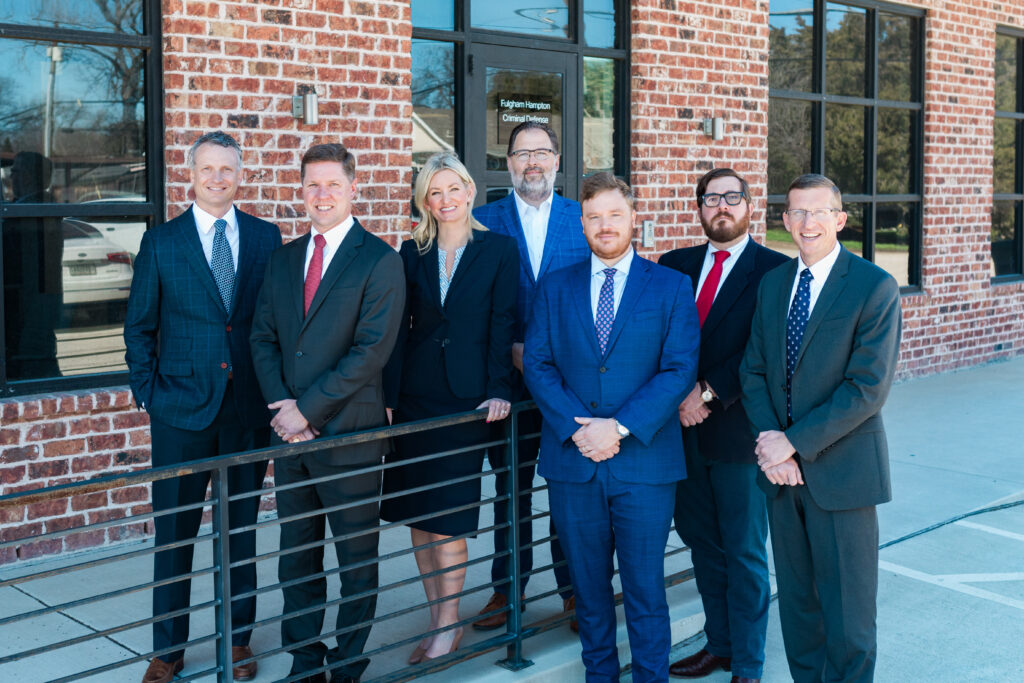
Drug weight, packaging, and the arrest location can affect whether you face decades in prison, and evidence takes shape early. Fulgham Hampton Criminal Defense Attorneys reviews police reports, lab records, and the search warrant, then explains where your charge for possession with intent to deliver and drug manufacturing in Tarrant County stands.
Call 817-877-3030 to have our team begin reviewing your case today.
Prior results do not guarantee a similar outcome. Statutes and procedures may change; verify current law before relying on this page.